Introduction
Looking for a stable office career that lets you stay organized, support a team, and keep everything running smoothly? Administrative assistant jobs are one of the most practical and widely available options. Almost every company — from small businesses to large corporations, hospitals, schools, law firms, and nonprofits — needs someone who can handle the day-to-day details so the rest of the team can focus on their main work.
This guide breaks down exactly what the job involves, what skills and qualifications you need, how much you can expect to earn, and clear steps to get hired.
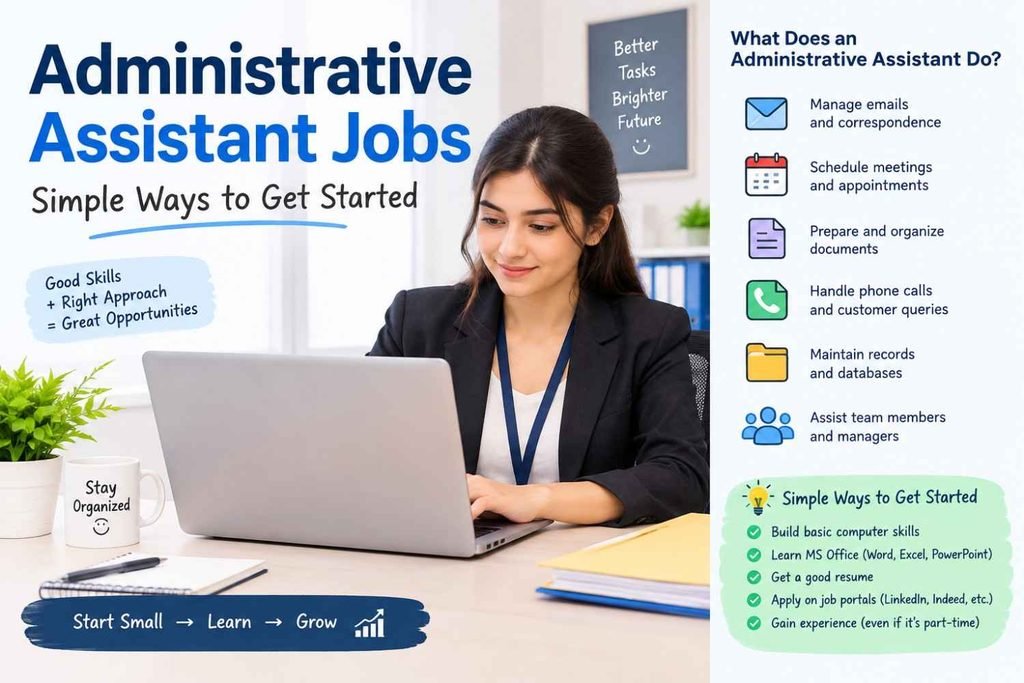
What Is an Administrative Assistant?
An administrative assistant is the person who keeps an office or department organized and efficient. You act as the central support system — managing schedules, handling communication, organizing information, and solving small problems before they become big ones.
The role is sometimes called office assistant, administrative coordinator, or executive assistant (when supporting senior leaders). While titles vary, the core purpose stays the same: make sure the workplace runs without unnecessary friction.
Key Duties and Responsibilities of Administrative Assistants
Daily tasks usually include a mix of the following:
- Managing calendars and scheduling meetings or appointments
- Answering phones, emails, and front-desk inquiries
- Preparing documents, reports, presentations, and correspondence
- Organizing digital and physical files
- Booking travel and arranging logistics
- Ordering office supplies and tracking inventory
- Taking meeting notes and following up on action items
- Handling basic expense reports or simple bookkeeping
- Coordinating small events or team activities
- Maintaining confidentiality with sensitive information
In smaller companies you often handle a wide range of tasks. In larger organizations the role may be more specialized. Executive assistants typically take on higher-level responsibilities such as preparing briefing materials, managing complex travel, or acting as a gatekeeper for a senior leader’s time.
Essential Skills Employers Look For
Strong administrative assistants combine technical ability with people skills. The most valued skills include:
- Clear written and verbal communication
- Excellent organization and time management
- Attention to detail
- Proficiency in Microsoft Office (especially Word, Excel, Outlook, and PowerPoint) and Google Workspace
- Comfort with common workplace tools such as Zoom, Slack, Teams, or project management software
- Ability to multitask and prioritize under pressure
- Professionalism and discretion
- Problem-solving attitude
- Friendly, service-oriented approach
Extra skills that help you stand out: intermediate Excel (pivot tables, formulas), basic bookkeeping, familiarity with CRM systems, or experience with AI productivity tools.
Education and Qualifications Needed
Most administrative assistant positions do not require a college degree. A high school diploma or GED is usually the minimum. Many employers prefer candidates who have some office experience or have completed short certificate programs in office administration or business skills.
Helpful (but not always required) credentials include:
- Certified Administrative Professional (CAP)
- Microsoft Office Specialist certifications
- Industry-specific training (for legal or medical administrative roles)
Practical experience often matters more than formal education. Many people enter the field through receptionist roles, temporary assignments, or internships and then move into full administrative positions.
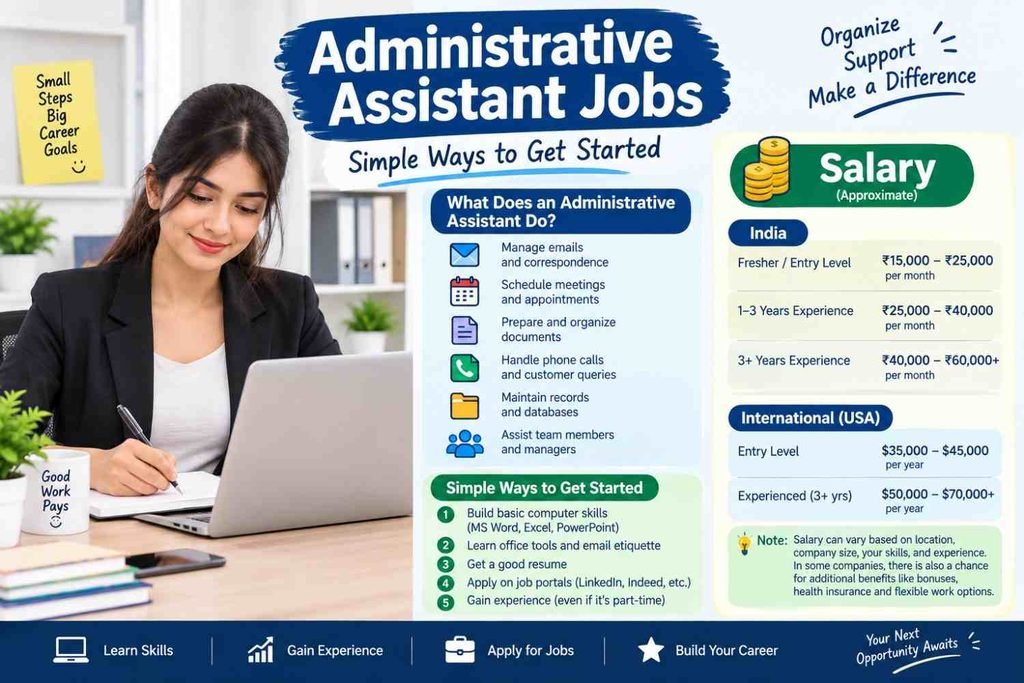
Administrative Assistant Salary and Job Outlook
Pay depends on experience, location, industry, and whether the role is general or executive-level.
Typical ranges in the United States:
- Entry-level or general administrative assistants: $36,000 – $45,000 per year
- Experienced mid-level roles: $45,000 – $58,000
- Executive assistants or specialized positions: $55,000 – $75,000+ (higher in major cities and industries like finance, law, or tech)
Remote and hybrid options have expanded opportunities, and some virtual assistant roles are paid hourly or on a contract basis.
Job demand remains consistent because nearly every organization needs administrative support. While some routine tasks are becoming automated, the need for reliable, organized people who can handle communication and coordination continues.
Check Crieteria of Administrative Assistant Jobs
How to Get an Administrative Assistant Job – Practical Steps
Evaluate your current strengths
List the software and tasks you already handle well. Identify any gaps (for example advanced Excel or calendar management) and close them with free online courses.
Create a focused resume
Highlight achievements instead of just listing duties. Use phrases such as “managed calendars for a team of 10,” “reduced scheduling conflicts,” or “handled confidential correspondence for senior staff.” Mirror keywords from the job descriptions you target.
Gain relevant experience if needed
Temp agencies, part-time receptionist jobs, volunteer administrative work, or short-term contract roles are excellent entry points.
Search and apply strategically
Look on LinkedIn, Indeed, company career pages, and specialized job boards. Set alerts for titles like “administrative assistant,” “executive assistant,” “office coordinator,” and “administrative coordinator.”
Prepare for interviews and skills tests
Be ready to explain how you prioritize tasks, handle difficult requests, and protect confidential information. Many employers give short practical tests (formatting a document or organizing a sample schedule).
Network
Tell people in your circle that you are looking. Referrals still fill a large percentage of administrative roles.
Consider remote and virtual options
Virtual assistant positions have grown significantly and can be a flexible way to build experience while working from home.
Pros and Cons of Administrative Assistant Jobs
Advantages
- Available in almost every industry and location
- Relatively accessible entry point into professional office work
- Opportunity to learn how organizations operate from the inside
- Clear paths to higher roles such as executive assistant, office manager, or project coordinator
- Mix of independent tasks and people interaction
Challenges
- Some days can feel repetitive
- You are often the first point of contact when problems arise
- Entry-level pay can be modest in lower-cost areas
- Workload may increase during busy seasons or when supporting multiple people
Tips for Growing and Advancing in the Role
- Volunteer for projects that expand your skills
- Learn the business goals of the team or executives you support
- Stay current with new productivity tools and AI assistants
- Ask for regular feedback and act on it
- Build strong working relationships across departments
- Consider specializing (executive support, legal, medical, or operations) to increase earning potential
Many administrative assistants later move into human resources, operations, project management, or even executive leadership after gaining experience and additional training.
Final Thoughts
Administrative assistant jobs offer reliable work, valuable professional experience, and the chance to become a key part of any team. Success in this role depends less on advanced degrees and more on reliability, clear communication, strong organization, and a willingness to solve problems quietly and effectively.
If you are detail-oriented, enjoy helping others stay productive, and want a career that exists across nearly every industry, this path is worth serious consideration. Start by refining your resume, strengthening your core software skills, and applying to roles that match your current experience. With consistency and a professional approach, you can move from job seeker to trusted administrative professional.
Read more other Info > Click here
1 thought on “Administrative Assistant Jobs: The Complete Guide to Duties, Skills, Salary & Getting Hired”