Introduction
If you’re looking for a healthcare career that lets you help patients every day without spending years in medical school, medical assistant jobs deserve a serious look. These roles sit right at the center of clinics, doctor’s offices, and outpatient centers. You work closely with physicians, nurses, and patients—handling both clinical and administrative tasks. Demand is strong, training is relatively short, and the work feels meaningful.
Here’s a clear, practical breakdown of what medical assistant jobs actually involve, what you need to qualify, how much you can earn, and the best steps to land one.
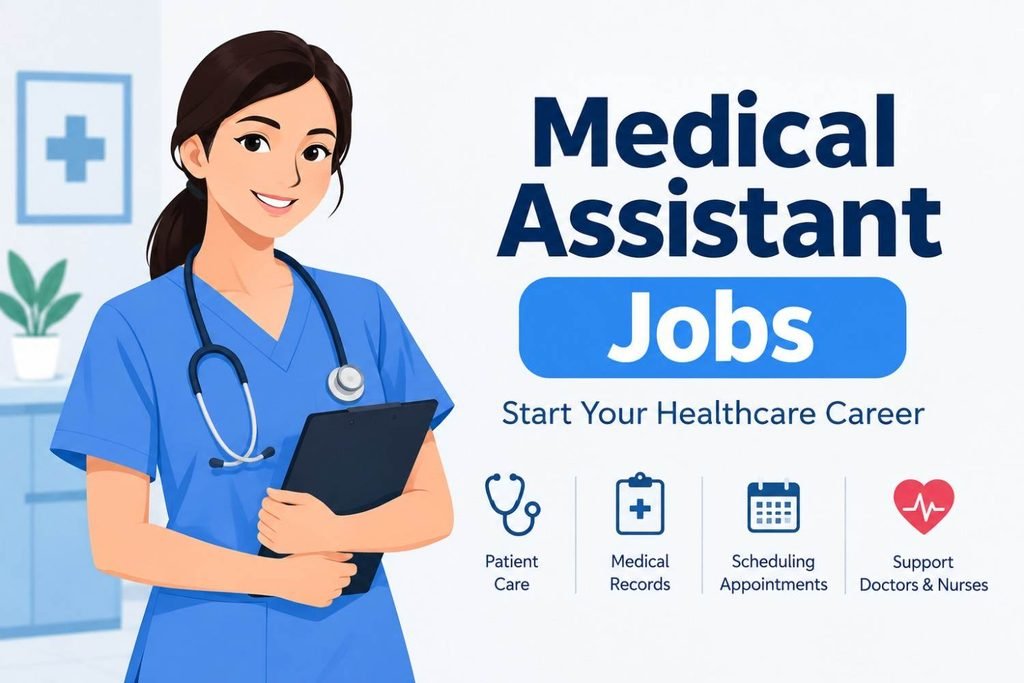
What Does a Medical Assistant Do?
Medical assistants are the versatile support staff who keep medical offices running smoothly. Unlike nurses, they usually don’t provide advanced clinical care or work independently. Instead, they blend front-office and back-office duties.
Clinical tasks often include:
- Taking patient vital signs (blood pressure, temperature, pulse, weight)
- Recording medical histories
- Preparing patients for exams
- Assisting the doctor during procedures
- Drawing blood or collecting lab specimens (in some states, with proper training)
- Giving injections or medications under supervision
- Performing basic lab tests or EKGs
- Sterilizing instruments and maintaining exam rooms
Administrative tasks typically cover:
- Scheduling appointments and managing the patient flow
- Checking patients in and out
- Handling insurance forms, billing codes, and prior authorizations
- Updating electronic health records (EHR)
- Answering phones and responding to patient messages
- Managing medical supplies inventory
The exact mix depends on the workplace. In a small private practice, you might do almost everything. In a larger clinic or hospital outpatient department, duties may be more specialized.
Where Do Medical Assistants Work?
Most medical assistant jobs are found in:
- Physicians’ offices (the largest employer)
- Outpatient care centers and specialty clinics (dermatology, orthopedics, cardiology, etc.)
- Urgent care facilities
- Hospitals (mainly outpatient or ambulatory settings)
- Community health centers and medical groups
Some also work in chiropractic offices, optical centers, or for home health agencies. Remote or hybrid roles are rare because the job requires hands-on patient contact, but some administrative-heavy positions may allow limited remote work for billing or scheduling.
Education, Training, and Certification Requirements
You don’t need a four-year degree. Most employers prefer candidates who have completed a postsecondary medical assisting program. These programs are widely available at community colleges, vocational schools, and some online schools (though clinical training must be in person).
Typical program length:
- Certificate or diploma: 9–12 months
- Associate degree: about 2 years
Coursework usually covers medical terminology, anatomy and physiology, clinical procedures, pharmacology basics, medical law and ethics, and administrative skills including EHR systems and coding.
Certification is not always legally required, but it strongly improves your job prospects and pay. The two most recognized credentials are:
- Certified Medical Assistant (CMA) from the American Association of Medical Assistants (AAMA)
- Registered Medical Assistant (RMA) from American Medical Technologists (AMT)
To sit for these exams, you generally need to graduate from an accredited program. Some states have additional requirements for performing certain clinical tasks (such as injections or phlebotomy). Always check your state’s medical board or health department rules.
Skills That Help You Succeed
Beyond formal training, successful medical assistants tend to have:
- Strong interpersonal and communication skills (you’ll talk to anxious patients all day)
- Attention to detail (medication doses, documentation, and insurance info must be accurate)
- Ability to multitask and stay calm under pressure
- Basic computer proficiency, especially with EHR software
- Empathy and professionalism
- Good organizational habits
Bilingual skills (especially Spanish in many regions) are a major advantage and can open more job opportunities.
Check Crieteria of Medical Assistant jobs
Medical Assistant Salary and Job Outlook
According to recent U.S. Bureau of Labor Statistics data, the median annual wage for medical assistants is in the mid-$40,000s, with the range typically falling between the high $30,000s and low $50,000s depending on location, experience, and setting. Larger cities, specialty practices, and states with higher costs of living generally pay more. Certified assistants and those with experience in high-demand specialties often earn toward the upper end.
Job growth is projected to be much faster than average for all occupations over the next decade. The aging population, expansion of outpatient care, and physicians needing efficient support staff all drive demand. Many openings also come from turnover as people move into related fields such as nursing or healthcare administration.
How to Become a Medical Assistant: Step-by-Step Path
- Research programs – Look for accredited certificate or associate programs near you. Check graduation rates, job placement stats, and whether the school prepares students for the CMA or RMA exam.
- Complete training – Finish the classroom and clinical externship portions. The externship is especially valuable—many students get hired by the same office where they trained.
- Get certified – Take the CMA or RMA exam soon after graduation while the material is fresh.
- Prepare your resume and applications – Highlight clinical skills, EHR experience, any specialty exposure, and soft skills. Include your externship details.
- Apply widely – Use hospital career pages, clinic websites, Indeed, LinkedIn, and local staffing agencies that specialize in healthcare. Don’t overlook smaller private practices—they hire frequently.
- Interview well – Be ready to discuss how you handle difficult patients, maintain confidentiality (HIPAA), and stay organized during a busy day. Some employers give skills assessments.
- Consider entry points – If you need income while training, some offices hire medical receptionist or patient service representative roles that can later transition into medical assisting once you’re certified.

Pros and Cons of Medical Assistant Jobs
Advantages:
- Relatively short training period compared with nursing or other clinical careers
- Steady demand and good job security
- Variety in daily work—no two days feel exactly the same
- Opportunity to make a real difference in patients’ experiences
- Clear pathways to advance (into nursing, practice management, or specialized clinical roles)
Challenges:
- Can be physically demanding (on your feet most of the day, occasional lifting)
- Emotional stress from dealing with sick or upset patients
- Moderate pay relative to the responsibility level in high-cost areas
- Need to keep skills current with new technology and regulation
Tips for Standing Out and Growing in the Field
- Pursue specialty certifications later (phlebotomy, EKG, or specialty-specific credentials).
- Learn the specific EHR system used by target employers.
- Build a professional network through your externship and local AAMA chapters.
- Consider cross-training in billing or coding if you want more administrative options.
- Treat every patient interaction as practice for better communication and empathy.
Many medical assistants eventually move into licensed practical nursing, registered nursing, or healthcare administration after gaining experience and further education. The role is an excellent launchpad.
Final Thoughts
Medical assistant jobs offer a practical, people-focused entry into healthcare. You get to support doctors, care for patients, and keep clinics operating efficiently—all with a training timeline measured in months rather than years. If you value variety, human interaction, and steady demand, this career path is worth serious consideration.
Start by researching accredited programs in your area, talking to working medical assistants if possible, and checking current local job postings to see what employers emphasize. With the right preparation and certification, you can move from student to employed medical assistant faster than you might expect.
Read More other Info > Click here